-

E. K. U. Gross
Chair Professor
Biography
E. K. U. (Hardy) Gross is a theoretical physicist working on electronic structure, many-body theory, and quantum dynamics. His academic career includes professorships at the University of Würzburg, Freie Universität Berlin, and the Hebrew University of Jerusalem, and leadership of the Theory Department at the Max Planck Institute of Microstructure Physics. He is one of the principal architects and driving forces behind time-dependent density functional theory, superconducting density functional theory, and the exact factorization of electron–nuclear dynamics.
Research interests
- Time-Dependent Density Functional Theory
Foundations and first-principles methods for electronic excitations, spectroscopy, and real-time quantum dynamics.
- Exact Factorization
An exact framework for coupled electron–nuclear dynamics beyond the Born–Oppenheimer approximation.
- Superconducting Density Functional Theory
First-principles descriptions of superconducting pairing, gap functions, and transition temperatures.
- Quantum dynamics and control
Shaping light–matter interactions to steer electronic and molecular motion.
- Time-Dependent Density Functional Theory
-

Peiwei You
Tenure-track Assistant Professor
Biography
Peiwei You completed his doctoral research at the Institute of Physics, Chinese Academy of Sciences, followed by postdoctoral research at the Hebrew University of Jerusalem. He has also carried out visiting research at École Polytechnique, collaborating with E. K. U. Gross.
Research interests
- Light-induced quantum motion
Excited states, nonadiabatic dynamics, and light-driven processes, especially photocatalytic water splitting.
- Path-Integral Time-Dependent Density Functional Theory
Nuclear quantum effects coupled to real-time excited state electron dynamics.
- Conditional-Probability Density Functional Theory
Electron correlation and conditional probability density in solids.
- Light-induced quantum motion
-
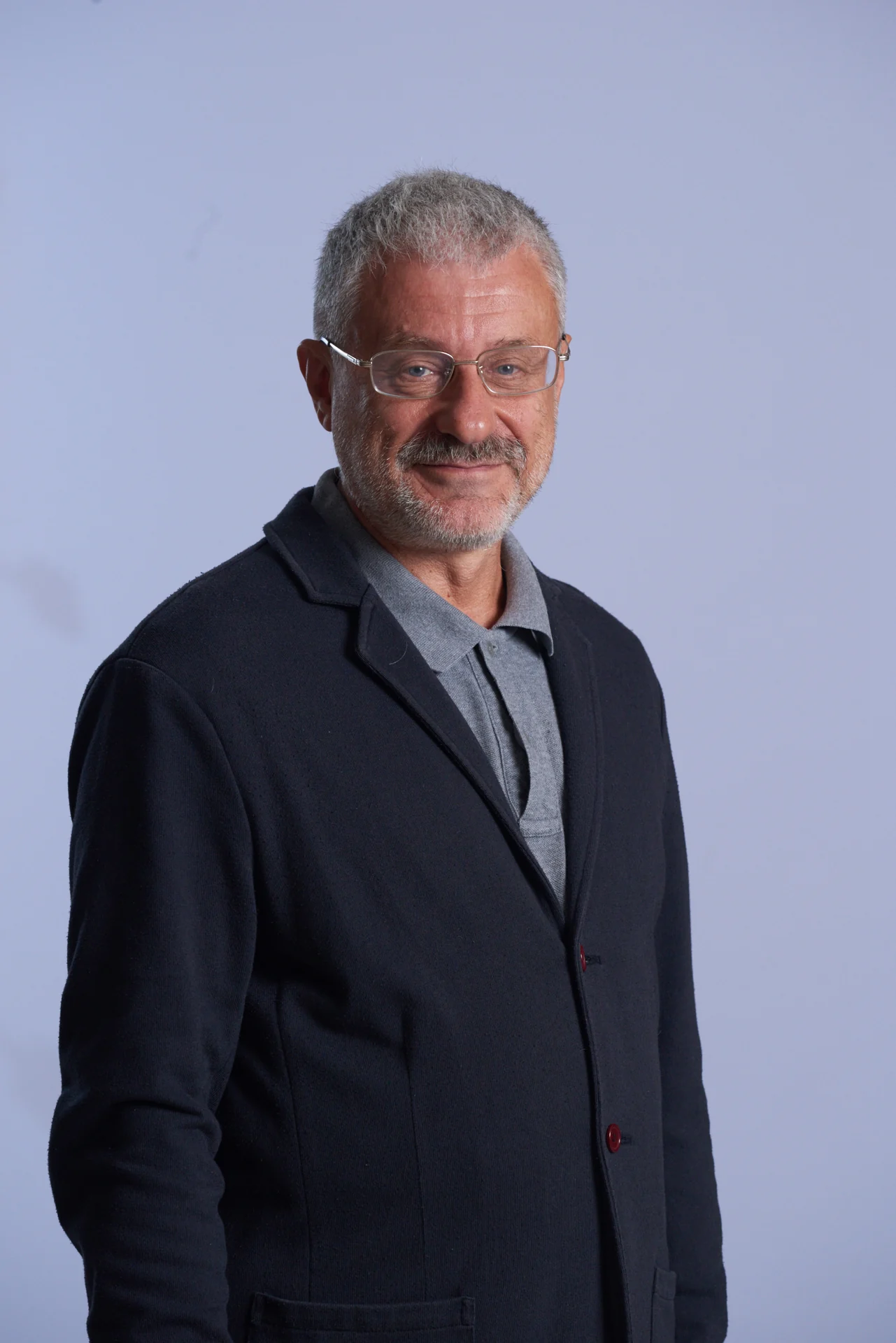
Vladimir U. Nazarov
Senior Research Scientist
Biography
Vladimir U. Nazarov is a theoretical physicist whose research focuses on time-dependent density functional theory. His academic career includes positions at the Fritz Haber Research Center for Molecular Dynamics, the Hebrew University of Jerusalem, Israel; the Research Center for Applied Sciences, Academia Sinica, Taiwan; Chonnam National University, Republic of Korea; the Institute for Solid State Physics, the University of Tokyo, Japan; Kyushu Institute of Technology, Japan; and the Institute for Automation and Control Processes, Far Eastern Branch of the Russian Academy of Sciences, Vladivostok, Russia.
Research interests
- Fundamentals and applications of time-dependent density functional theory
Meta-generalized-gradient approximations for optical response, and time-dependent exact exchange based on McLachlan’s variational principle.
- Electronic and ionic transport
Many-body effects in the stopping power of ions in metals, and the theory of electron energy-loss spectroscopy.
- Low-dimensional systems
Dynamic response and scattering resonances in quasi-two-dimensional crystals, including coupled electron–lattice motion.
- Exact factorization for field-driven phenomena
Coupled electron–nuclear dynamics and the interplay of physical magnetic fields with Berry-curvature fields beyond the adiabatic approximation.
- Fundamentals and applications of time-dependent density functional theory
-

Xinbao Liu
Postdoctoral Researcher
Biography
Xinbao Liu completed his doctoral research at the Institute of Physics, Chinese Academy of Sciences, followed by postdoctoral research at the Hebrew University of Jerusalem. He has also been a visiting postdoctoral researcher in the Theoretical Spectroscopy Group at École Polytechnique.
Research interests
- Nonadiabatic electron–phonon dynamics
First-principles simulations of coupled electronic and lattice motion away from equilibrium.
- Light-driven quantum materials
Ultrafast phase transitions, coherent phonons, and optically controlled material properties.
TDCDFT and thermalization
Exploring electronic relaxation and thermalization through time-dependent current-density functional theory.
- Nonadiabatic electron–phonon dynamics
-
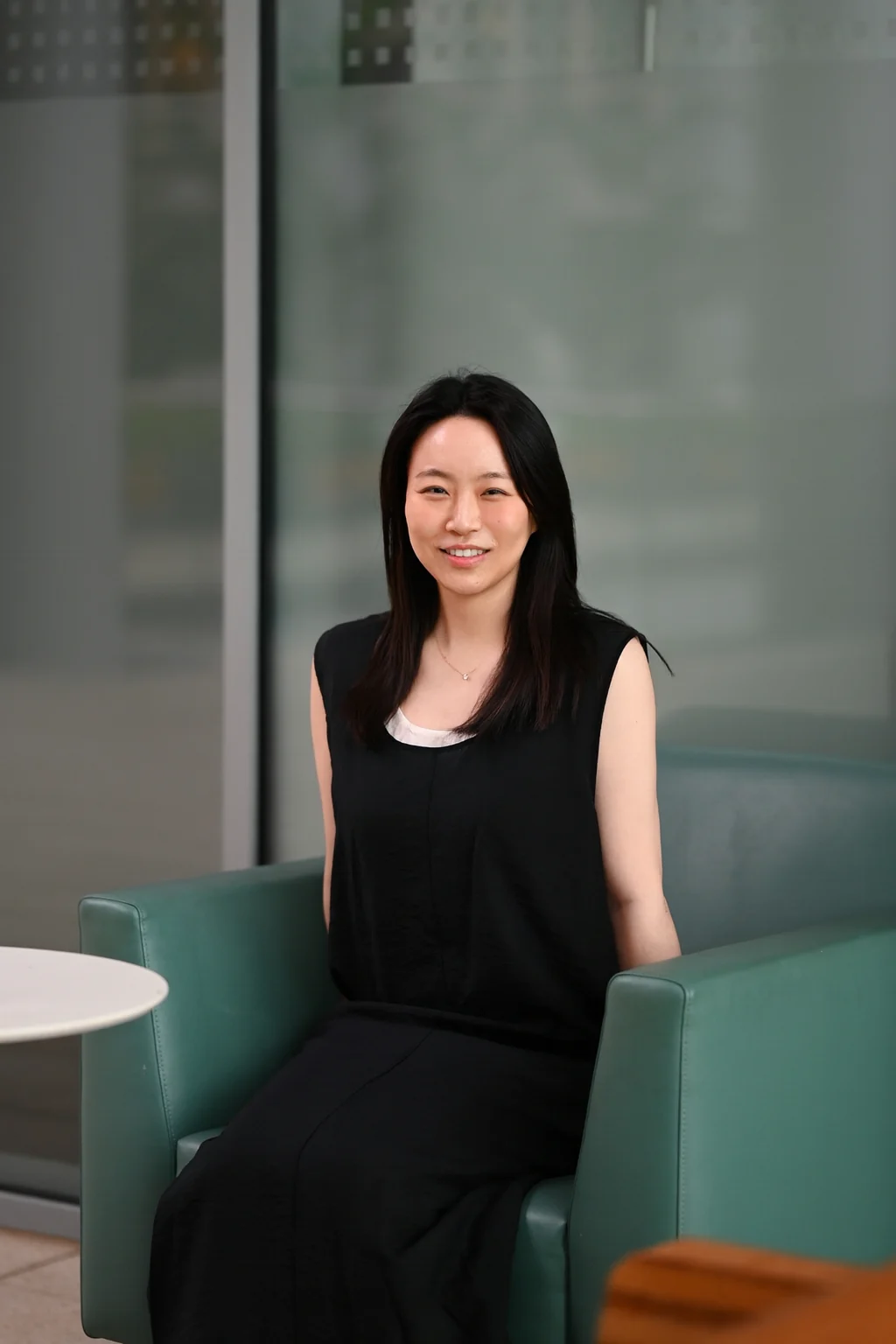
Yifei Qi
Administrator
Supporting the laboratory’s daily administration and coordination.
People
The people behind the ideas.